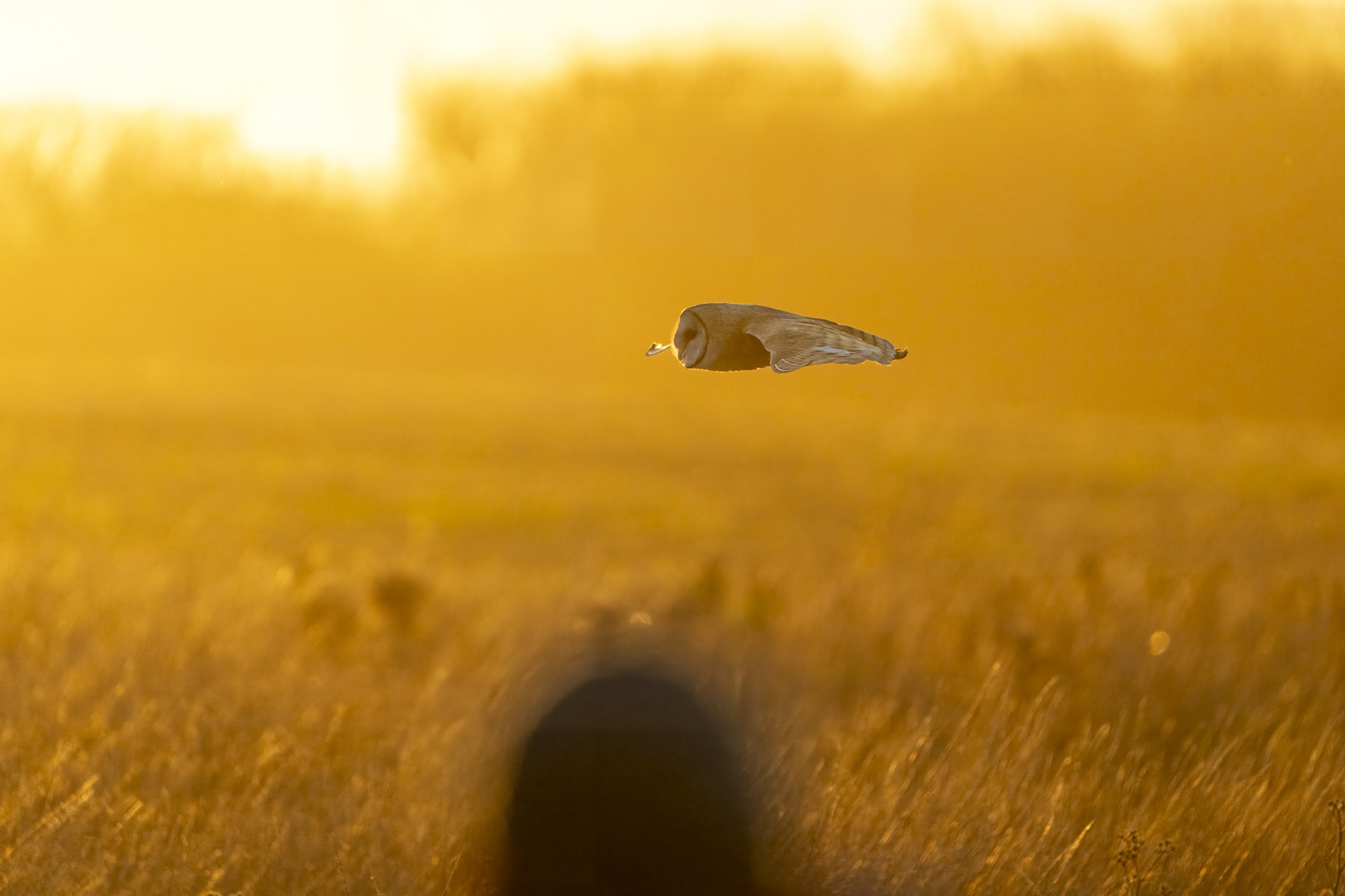
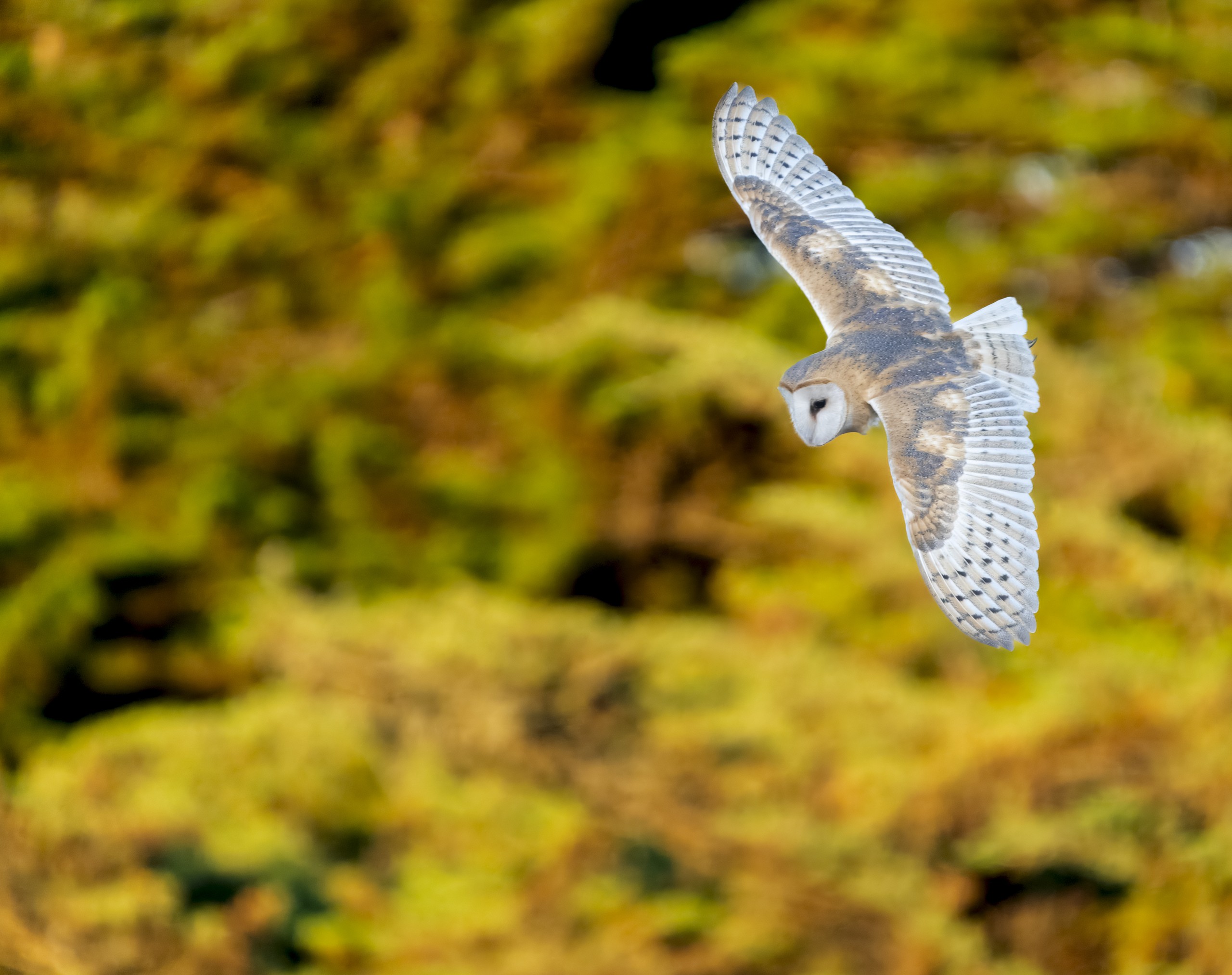
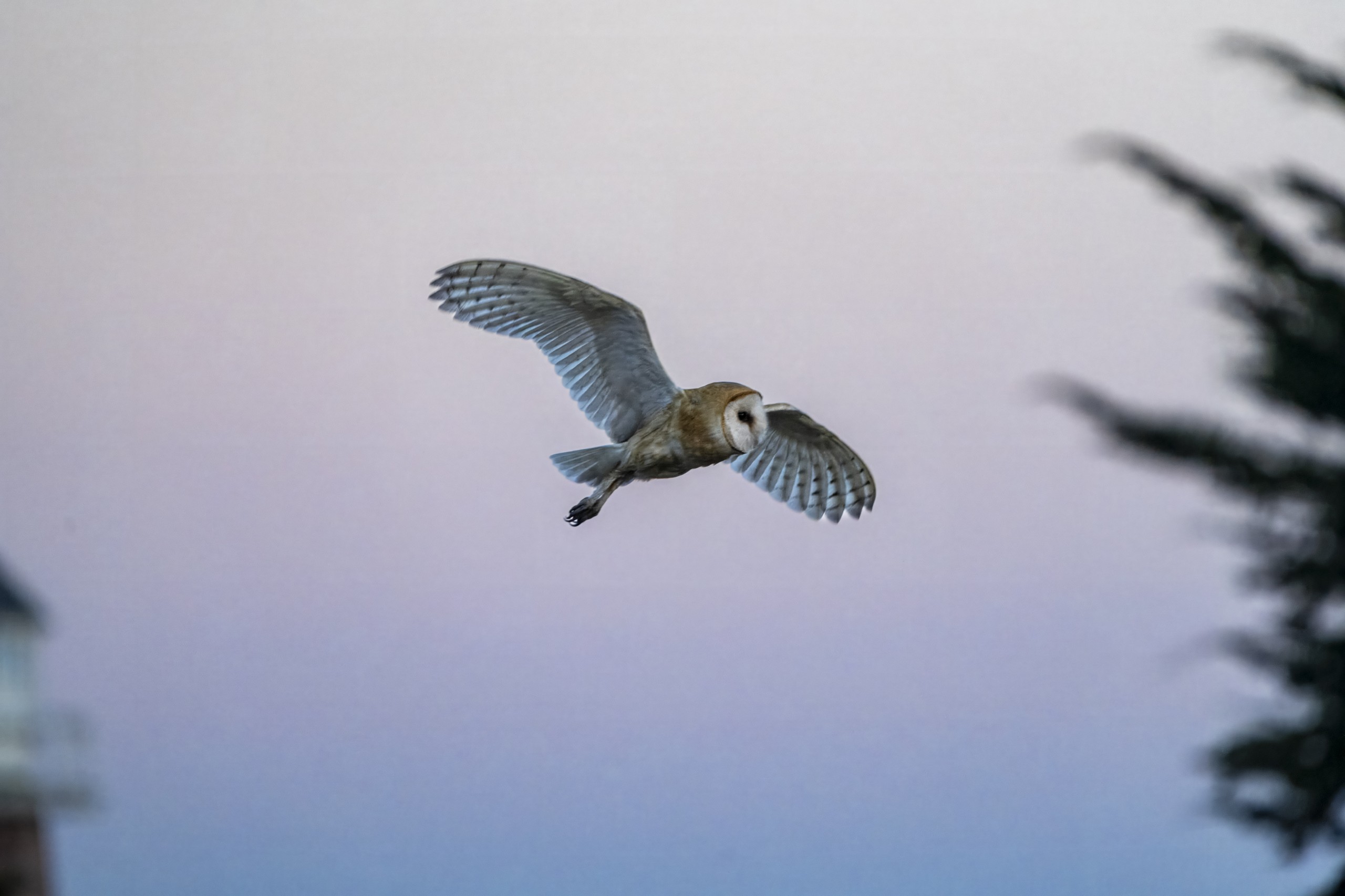
I'd been watching the sunset from West Cliff when the owl appeared — silent, low, cutting across the open grass with that impossible buoyancy barn owls carry. A crowd was gathered for the colors over the water. Nobody was watching the field.
It was my first real opportunity to observe a Tyto furcata up close, and it really was magnificent to witness. The bird worked the edge of the park methodically, quartering back and forth in the fading light, completely indifferent to the people watching.
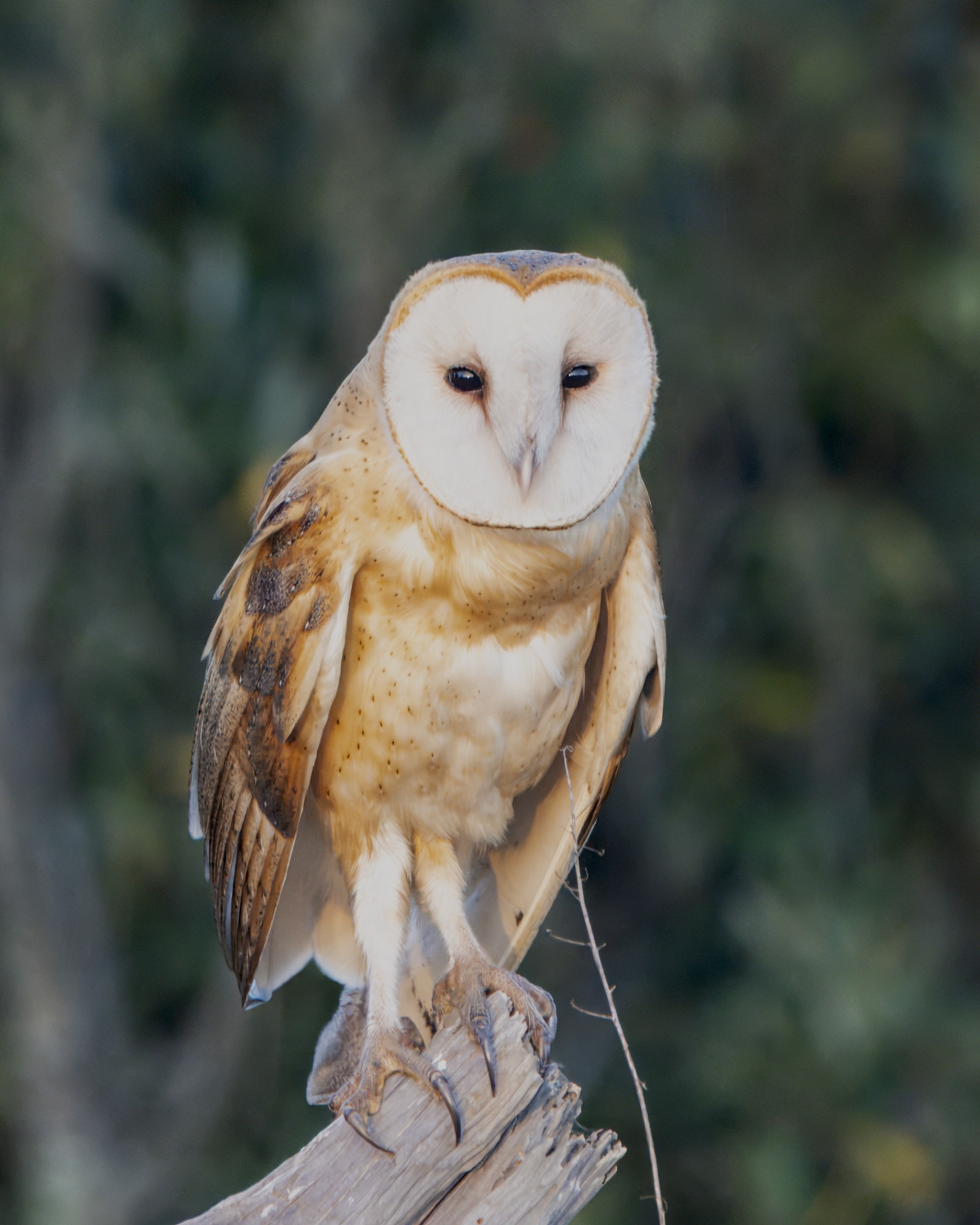
The heart-shaped facial disc is striking at close range. What looks like a mask is actually a parabolic sound reflector — each side slightly asymmetrical, tuned to catch the micro-delay between a sound reaching one ear versus the other. This bird can locate a mouse under six inches of snow without seeing it.
Barn owls are year-round residents along the Santa Cruz County coast, but encounters like this are rare. They're most active in the hours just after sunset and just before dawn, and they tend to work the margins — grassland edges, fence lines, disturbed open ground. The light that evening happened to be perfect and the bird happened to be hunting early.
The Sony 200–600mm meant I could stay back and let the bird work without pressure. After about twenty minutes it drifted south along the bluff and disappeared. The sunset was still going but honestly nobody cared anymore.